

The Feed Keeps The Score
Why The Feed is now firmly in the Power Seat

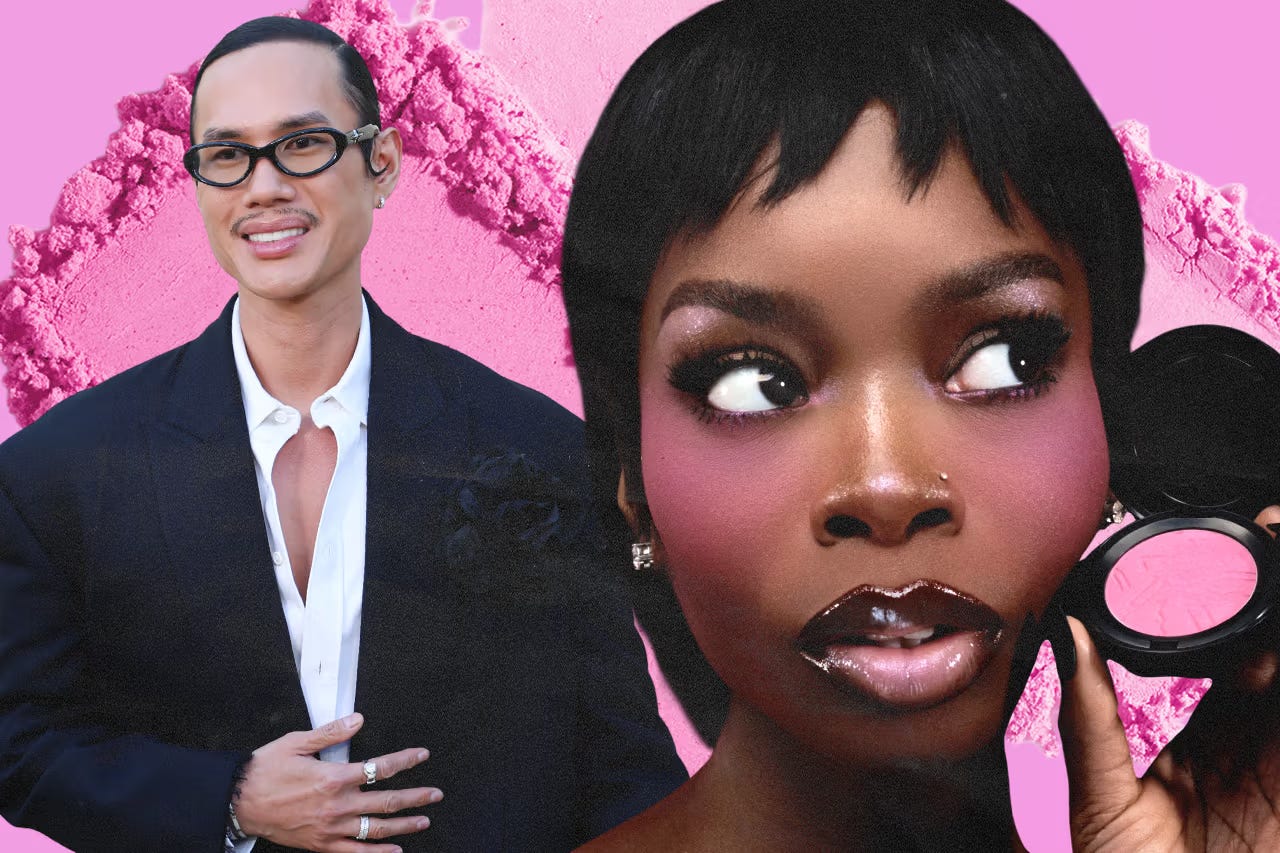
A phrase I reached for this week whilst discussing the Patrick Ta x Painted by Esther debacle was the feed keeps the score, which inspired this post.
(image from Hypebae)
It’s a pattern I’ve watched play out countless times, so much so that I’ve stopped being surprised by it, and started being surprised by the brands that still haven’t learned.
In a time where it feels like creativity belongs to everyone, and simultaneously no-one, when it comes to commitments, creative disputes and Who-Said-What-Whens The Feed (namely the community, the fans, the chronically-onliners and the receipt pullers) will find out. And they’ll always keep the score.
The three examples below span different brand sizes, creator profiles and forms of dispute. Taken together, they tell us something important about where the creator economy is right now. Not just about ethics (though it’s absolutely about that), but about power. Who holds it, who mistakenly assumed they had it, and who ultimately decides.
I’ve spent years talking about the power shift between brands and creators, but that framing is now outdated. The real power doesn’t sit with either.
I. Patrick Ta Beauty vs. Painted by Esther
In May, Patrick Ta launched a product called the Transition Blurring Blush Duo, claiming he coined the term “transition blush.” Ta built a campaign around the technique, positioning it as something he’d created.
Meanwhile, Painted by Esther. Ngozi Esther Edeme - a Black British-Nigerian makeup artist who had spent years building her creative identity around this technique - was executing it on leading figures such as Naomi Campbell, Tyla, Kelly Rowland, Viola Davis, SZA, Doechii. When Edeme executed the look on Love Island USA star Olandria Carthen in 2025, it went truly, dent-the-internet, viral.
The Feed knew this, they were watching.
As a result, when Patrick Ta Beauty went live with their new blush product, the comments moved fast in response.
Archival footage, comments, images were pulled. Side-by-sides went viral - if you’ve been on BeautyTok in the last couple of weeks, it’s been the headline across Beauty and as an example cited for more poignant discussions across creativity and theft.
Then came the detail that turned a controversy into something more structurally damning: Patrick Ta’s team had applied for a trademark on the term “transition blush” in May 2025. A full year before the product publicly dropped. By the time this dispute was on The Feed’s radar, Ta was already on thin ice.
In December 2024, influencer Avonna Sunshine had gone viral for snapping his blush palettes in half, calling out his brand for not paying Black creators - a video that got over +11M views. Ta apologised.
Then when Jools LeBron revealed in early 2025 that she had been flown to New York for his foundation launch, made content at the event, and never been paid (while other creators at the same event were compensated), The Feed retrieved the Avonna Sunshine apology, placed it next to this new developement, and made its verdict.
Ta eventually issued a fuller apology this month to “those offended”, writing that the launch had “contributed to a larger issue than I first understood.” By this time however, the community wasn’t reacting to a single misstep, it was completing a picture it had already started building.
One thing The Feed doesn’t stand for is smaller creators being exploited. Lesson One.
II. Mikayla’s L’Oreal Lashgate
In January 2023, TikTok beauty creator Mikayla Nogueira - then at 14.4M followers - posted a 44-second branded video for L’Oréal’s Telescopic Lift mascara. She declared it “the lashes of her dreams”, was speechless, nothing would ever compete etc. etc.
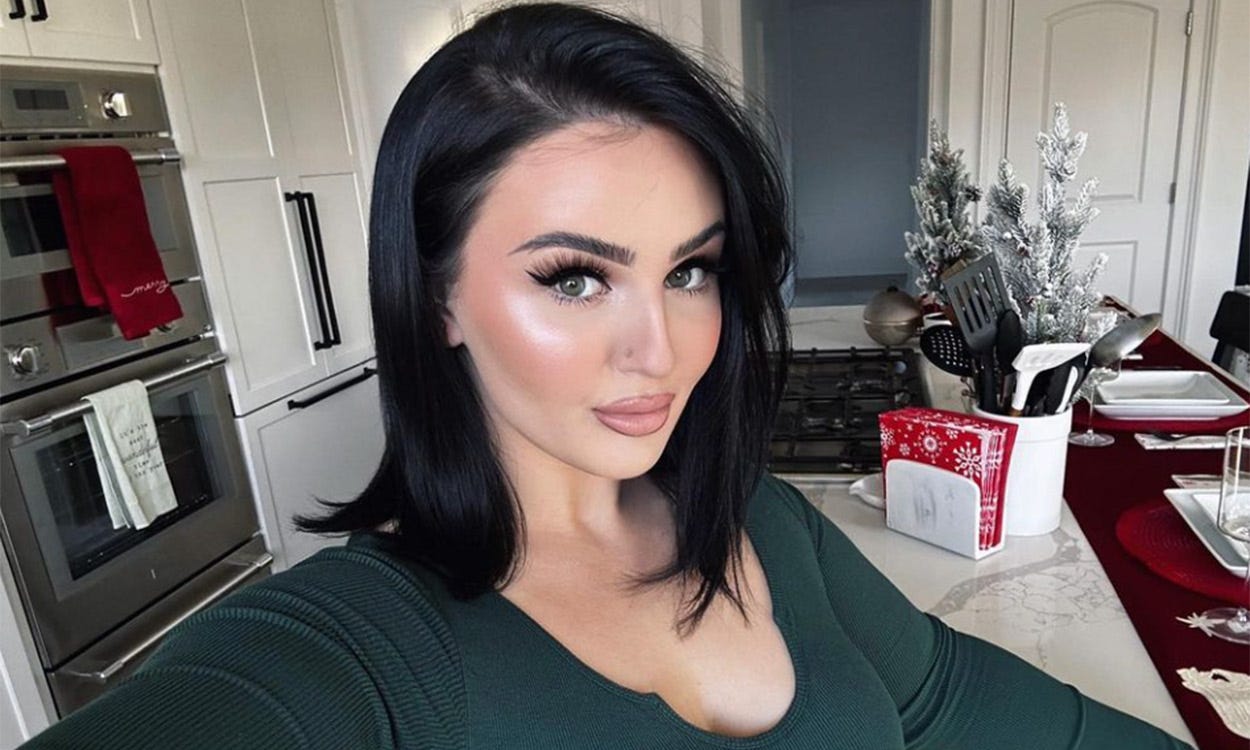
I’ve been following Mikayla since she was 60k-ish and I remember watching this video at the time and holding back laughter.
The Feed identified what appeared to be a pair of Ardell Demi Wispies false lashes edited between two coats of mascara. Naturally, comments flooded in citing the deception, calling out the specific lash style and #Lashgate2023 was born. The video ultimately garnered over 44 million views, and the ratio of negative commentary was remarkable.
The Feed might be the most democratic body that exists today. They’re deeply proactive, with infinite patience and flawless recall and always on the side of social justice.
The Feed doesn’t skim content the way a brand’s PR team might, it watches closely - and in slow motion if necessary. It knows what Ardell Demi Wispies look like, and it knows what three coats of mascara look like. And when those two things don’t match, it says so - loudly, collectively and with evidence attached.
L’Oréal didn’t comment. Nogueira initially denied it, then went silent for over a week.
The Feed also doesn’t not appreciate being deceived. Lesson Two.
III. Youthforia and that Shade Extension
I enjoyed watching Fiona Co Chan, the founder of Youthforia, on Shark Tank. She was a young woman of Chinese-Vietnamese heritage, whip smart and managed the sharks beautifully to secure funding.
When her clean beauty brand launched its ‘Date Night Skin Tint’ in 2023 with 15 shades - only four of which catered to medium-to-deep skin - The Feed called it out immediately. The brand responded quickly and promised an expanded range.
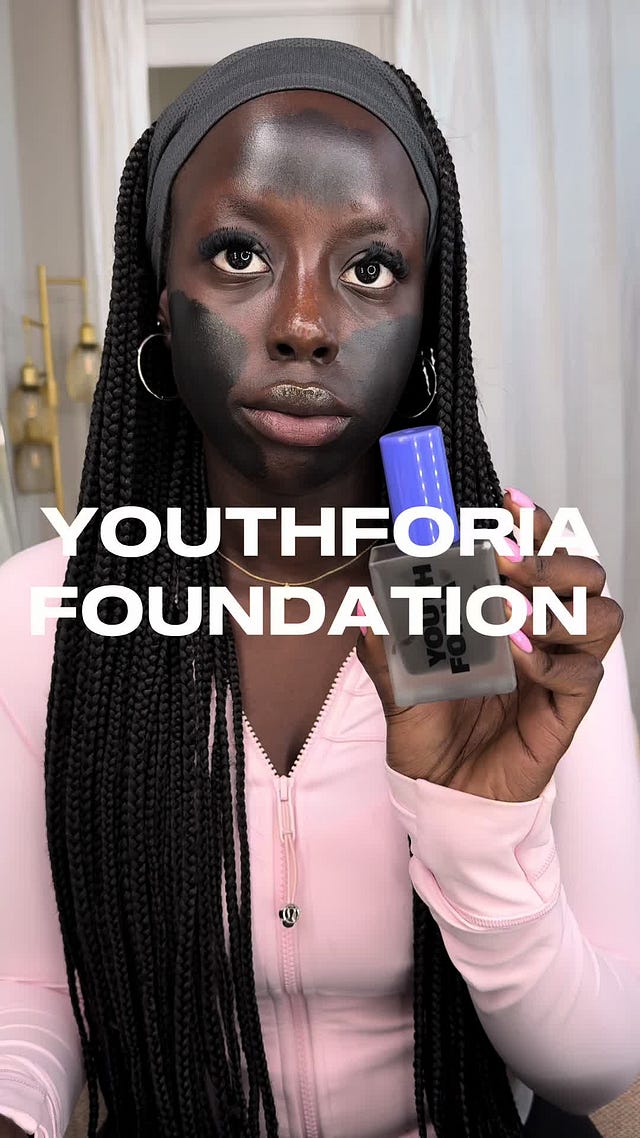
In March 2024, the expanded range arrived and Beauty creator Golloria George, who runs a regular and fantastic series, The Darkest Shade, swatching the darkest shade of products from different brands, posted her review of shade 600 — Youthforia’s new offering.
 Tiktok failed to load.
Enable 3rd party cookies or use another browser
What the brand had produced as its answer to deep skin tones appeared closer to pure black pigment, than any wearable foundation shade. George rightfully demanded it be pulled from shelves.
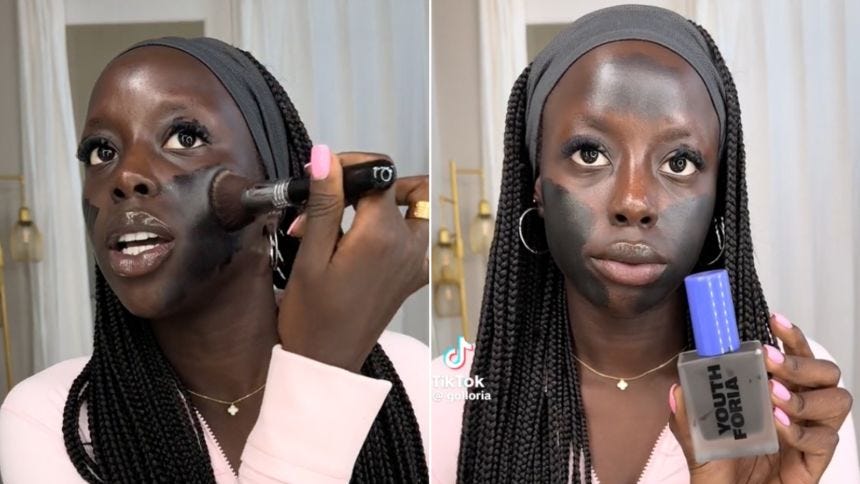
The brand had been called out, then promised to do better, then delivered something worse because, ultimately, they didn’t understand what the problem was.
What The Feed is brilliant at is holding brands accountable to their stated commitments against their subsequent behaviour - and then publishes the deficit if there is one. It doesn’t mean they’re always right, but it does mean they’re a powerful force as we encourage brands to meet communities where they are when it comes to diversity and inclusivity.
August 2025 Youthforia announced it was going out of business.
Which brings us to the most crucial lesson, Lesson Three. If given the chance to make amends, The Feed is unforgiving if you fail. Especially when it comes to DE&I.
The New Balance of Power
These three stories - creative credit, branded content authenticity, inclusivity failure - feel different on the surface, but the underlying structure is identical.
In each case, a brand or individual assumed they controlled the narrative.
Patrick Ta assumed he could productise his way into creative ownership.
Nogueira assumed a 44-second video would be consumed at face value.
Youthforia assumed a shade expansion, however inadequate, would be accepted as progress.
In each case, The Feed disagreed. And The Feed, unlike a press office, brand or manager doesn’t have office hours.
They have collective power and a hive mindset.
We talk endlessly in this industry about the power shift between brands and creators - brands adapting to creator culture and creators gaining leverage. But that framing is still positioning both parties as the active agents, with everyone else as the audience.
What’s actually happening is more radical - the audience has become the institution.
The Feed isn’t a marketing channel.
It is not a distribution platform.
It is not even, in the traditional sense, a community.
It is a networked, permanently archiving intelligence collective that applies consistent standards to brand and creator behaviour over time - standards the they did not write and cannot revise.
It remembers what you said in 2021, it remembers the apology you issued in 2024, it remembers the promise you made in a TikTok comment at 23:11 on a Tuesday, and when your behaviour in 2025 contradicts any of those things, it surfaces them, sequences them, and presents the pattern.
No brand communications team moves that fast.
No PR agency has that institutional memory.
No founder’s personal account has that reach.
The Feed is the lead stakeholder. And it didn’t ask for the role, it simply took it.
We moved our trust from brands to creators. Then creators reminded us they're human too… The feed didn't campaign for the role of arbiter, it just turned out to be the only one keeping an accurate score.
Three Things to Bear in Mind
Three realities that, if genuinely applied, would prevent most of what I’ve described above.
One: your archive is their property.
Every post you have ever made, every comment you have ever left, every promise a founder has made in a live stream or a caption or a DM screenshot - that is not your content. It belongs to The Feed. It will be retrieved when it becomes relevant. The question is not whether your past statements will be examined in the light of your future behaviour, the question is whether those statements will support or undermine you when they are. Build accordingly.
Two: an apology opens a new ledger, it doesn’t close the old one.
This is the thing that almost every brand gets wrong.
An apology is not a resolution, it is a public commitment to behave differently. The feed treats it as such.
From the moment you apologise, the community begins watching for whether the apology is true - not in sentiment, but in practice. Patrick Ta’s 2024 apology to Avonna Sunshine did not close that chapter, it opened a new one in which the next instance of the same behaviour would be read as evidence that the apology was performative. An apology that is not followed by visible structural change is, in the feed’s accounting, worse than no apology. It’s a confirmed pattern and good luck recovering from that.
Three: the community around a creator is not your audience. It’s theirs.
When you work with a creator - whether you’re licensing their technique, co-creating a product, or running a sponsored campaign - you are borrowing access to a trust that took years to build and that you did not build. That community’s primary loyalty is not to you, it’s to the person whose content they chose to follow, whose name they recognise, whose taste they trust. When that person tells them something went wrong, they don’t weigh the brand’s counter-narrative against it, they believe them because they are the one they showed up for.
This is not a risk to be managed. It is a structural truth to be respected.
Work with creators as though their community is keeping the score — because it is, always.
The only question is whether you'll like what the tally says.
MMxo
Loved this read and these comparisons ! Felt myself nodding the whole time as I watch my FYP go to war.