

Life, Art… or Algorithm?
A Long Read on TikTok’s Monolith, Original Thought & the End of “Life Imitates Art”

For most of history, culture moved in a loop.
Life happened
Artists interpreted it
Culture absorbed it
Life responded
Art imitated life, life imitated art - a feedback cycle that was non-lineaer, messy slow, human.
But since 2017, something has shifted.
Since TikTok landed in the West and became the defining online media engine - now tech triggers this loop.
I hope you’re sat.
How the Monolith Changed Everything
When TikTok launched in the West after ByteDance spent $1bn acquiring Musical.ly with the focused intention of plugging its users (huge US database…) into a far more powerful engine. This was the arrival of a different philosophy of the internet.
If Facebook connected you to people you knew.
Instagram connected you to people you wanted to know.
TikTok connected you to an algorithm that knows you better than you know yourself.
This distinction is crucial for the direction of our thesis.
I watched an incredible YouTube video on the TikTok x US sale.
My main takeaway was ByteDance’s obsession with retention.
And Stickiness.
And Dwell Time.
The “Monolith” (TT’s algorithmic infrastructure) was never designed to show you what your friends were doing, like other social media platforms. It was designed to understand, in real time, who you are becoming.
Not just what you like, not just what you engage with, but how your mood shifts.
Beyond views, likes, shares which are active signals, the Monolith is focused on how long you hesitate, or when your thumb slows - real-time learning so tight it bypasses conscious decision-making. We’ve never experienced that before at this scale.
Before You Create, You’ve Already Been Informed
Here’s the part that fascinates me (and gives me much pause).
The world used to create from lived experience. Now we create from algorithmically informed inspiration. Before you:
start a brand
write a song
launch a trend
develop an aesthetic
…you’ve already been fed thousands of micro-signals about what performs.
What hooks in the first three seconds
What colour palettes are trending
What tone of voice converts
What punchline structure lands
Some might call this just “being culturally aware”, but it’s deeper than that.
A while ago, I saw an image of some of the biggest luxury fashion houses in the world and the recent changes to their logos each had implemented, image below…
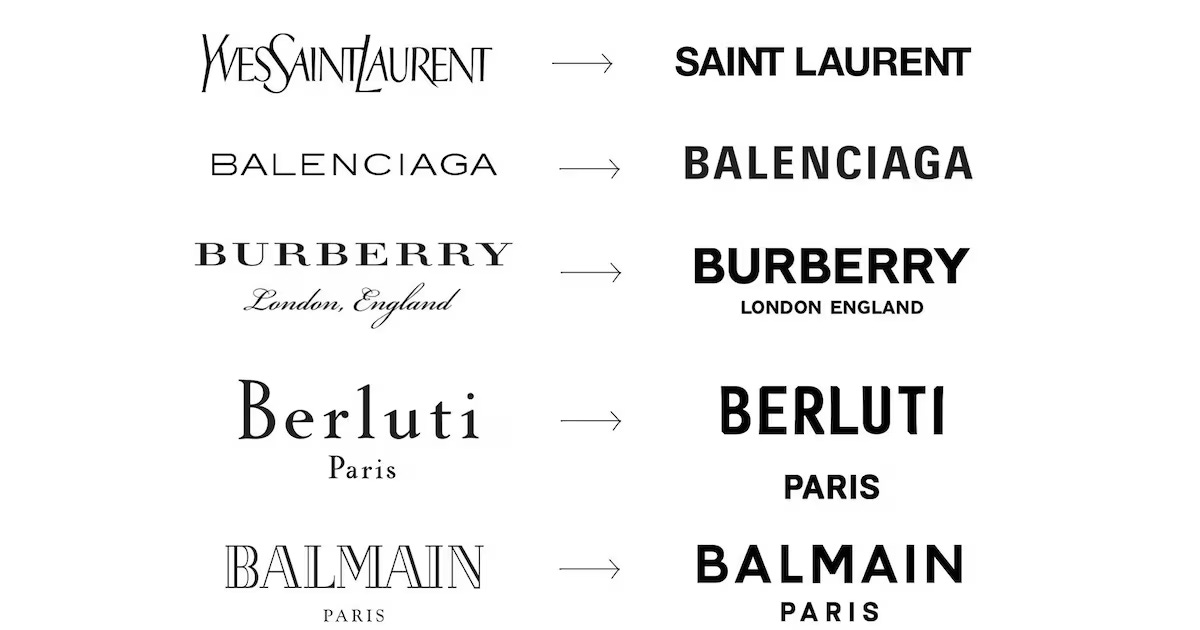
The similarity is shocking.
A small example that even in some of the best regarded creative outlets, the algorithm is pre-shaping art.
This Is Historically New
We’ve obviously had mass media informing and influencing us for some time -
Television/Advertising shaped Beauty standards
Magazines shaped taste
Hollywood shaped aspiration
But those systems were slower, more centralised and far less personalised.
TikTok’s difference is speed + precision + scale.
TikTok surpassed Google as the most visited site in 2021.
Douyin hit 100M users in one year (it took Facebook four years).
How? Simple.
ByteDance built a system that treats every user like the potential next viral moment - TikTok shifted away from the ‘friendship graph’ (FB / IG / YT uses this (although now less so because they’re trying to re-create the Monolith)) to the ‘interest graph’ which is a feedback loop based on interest that’s so tight, it’s able to anticipate passive behaviour.
That level of anticipatory influence has never existed before in Western culture. We are engaging with the most sophisticated passive attention-capture machine ever created - which is why TikTok’s dwell time exploded and rivals that of long-form streamers like Netflix.
And importantly, creativity is being pre-determined by it.
The Snake Eating Itself
Ok so here’s the tension -
We are in the biggest virality opportunity window ever.
A teen can build a global audience in months
A niche aesthetic can become mainstream in weeks
A song can chart because of a 12-second soundbite
It’s democratising in theory - and has created a growing and eager audience. But what happens when we are now seeing signs that creators make work based on what the algorithm rewards, rather than what moves them
The algorithm learns from that work. Then feeds it back as inspiration to the next creator… Over and over… A closed loop… A snake eating itself.
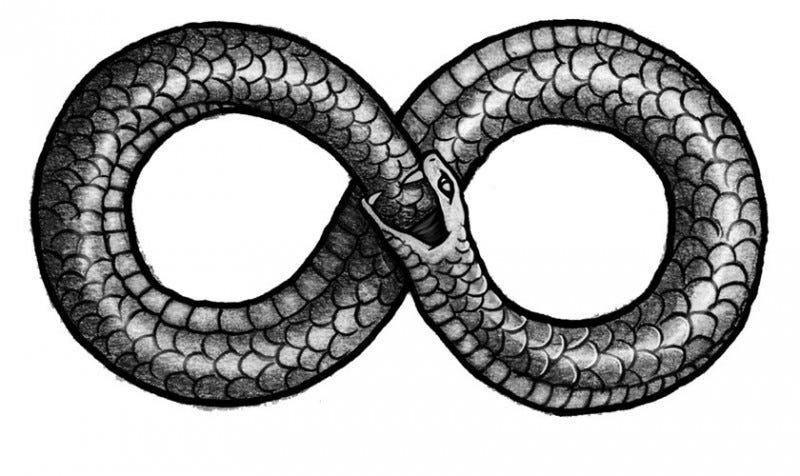
When originality becomes pattern recognition, we risk entering a moment where culture might seem new every week, but says the same thing each time.
Why This Matters for Beauty (+ Everything Else)
If you zoom out, you can already see these effects.
We’ve discussed the Clean Girl aesthetic in multiple previous posts. It didn’t emerge by accident - it was highly repeatable, easy to film and easy to understand.
So it spread.
Now Makeup Maximalism returns - not just as rebellion against minimalism, but against algorithmic perfection. More asymmetry. More mess. More visible humanity.
The irony? Even rebellion becomes format once the algorithm understands it.
This is the core tension brands and creators need to understand - you are not just responding to culture. You are responding to a system that is shaping culture before you even touch it.
Coming From The East
What’s interesting is that in China, behaviour is already shifting.
You may remember when US creators first heard TikTok might get banned, there were a large amount of “TikTok refugees” joining a Chinese app called RedNote (the Guardian write about it here)/ which is now more culturally dominant with Gen Z than Douyin.
Its focus is utility, rather than dopamine-fuelling entertainment, and is optimised for saves, not views.
Trust, not just retention.
Showing us that in China, (thankfully) doom-scrolling has passed its peak and young users are craving value over stimulation.
As far as I’m concerned, we already have this platform in the West - it is and always will be (IMHO) YouTube. Which makes this time in internet history feel transitional, rather than final (thank literal fuck for that).
Ok, So What Now?
This isn’t an existential panic (for once) and this is not anti-TikTok (I love TikTok) or anti-tech (that’s silly).
Refusing to engage makes you irrelevant - but engaging blindly makes you programmable at best, and endangered at worst.
The social media opportunity is extraordinary, as the creator economy grows and more and more media dollars enter the arena, it means -
A huge opportunity to monetise
Global reach
Autonomous distribution
But we need to maintain true artistry alongside this opportunity.
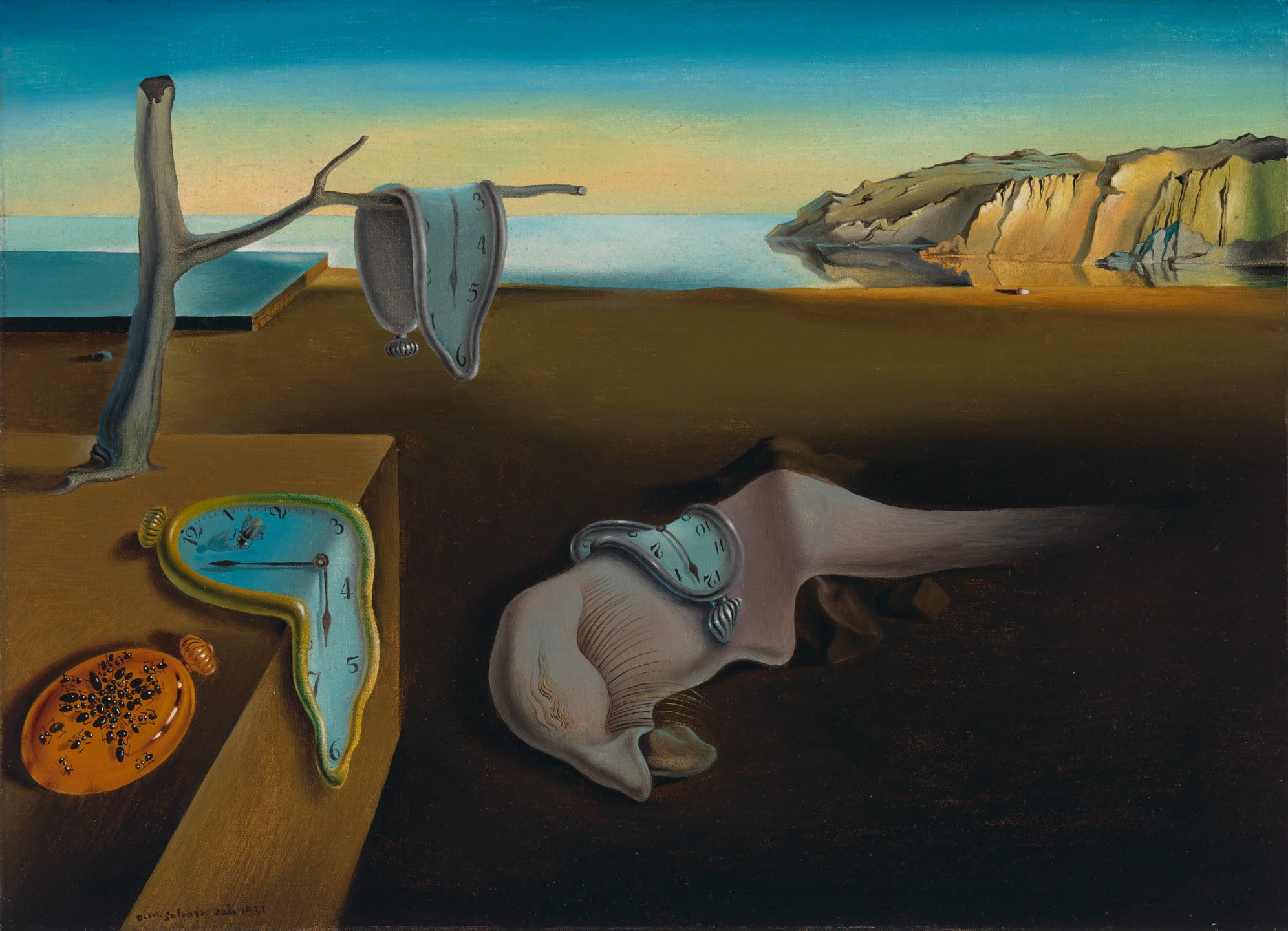
For centuries it was:
Life → Art → Life
Now it’s often:
Algorithm → Art → Life
The biggest creative flex of the next few years will not be virality.
It will be containment.
MMxo
Love this take so much lady. Hit the nail on the head